Battle flags have served as enduring symbols of unity, pride, and purpose across centuries of warfare and culture. This post traces their evolution from ancient battlefield standards to modern regimental and national flags, explaining their historical function, symbolic meaning, and continued role in military and team identity. It also details how production technology preserves that tradition through precision control and fixed-orientation safeguards — preventing reversed or distorted flag prints during apparel design. Finally, readers can download the official static Battle Flag SVG to incorporate into their layouts as a permanent, non-dynamic emblem of respect, discipline, and heritage.
Blog
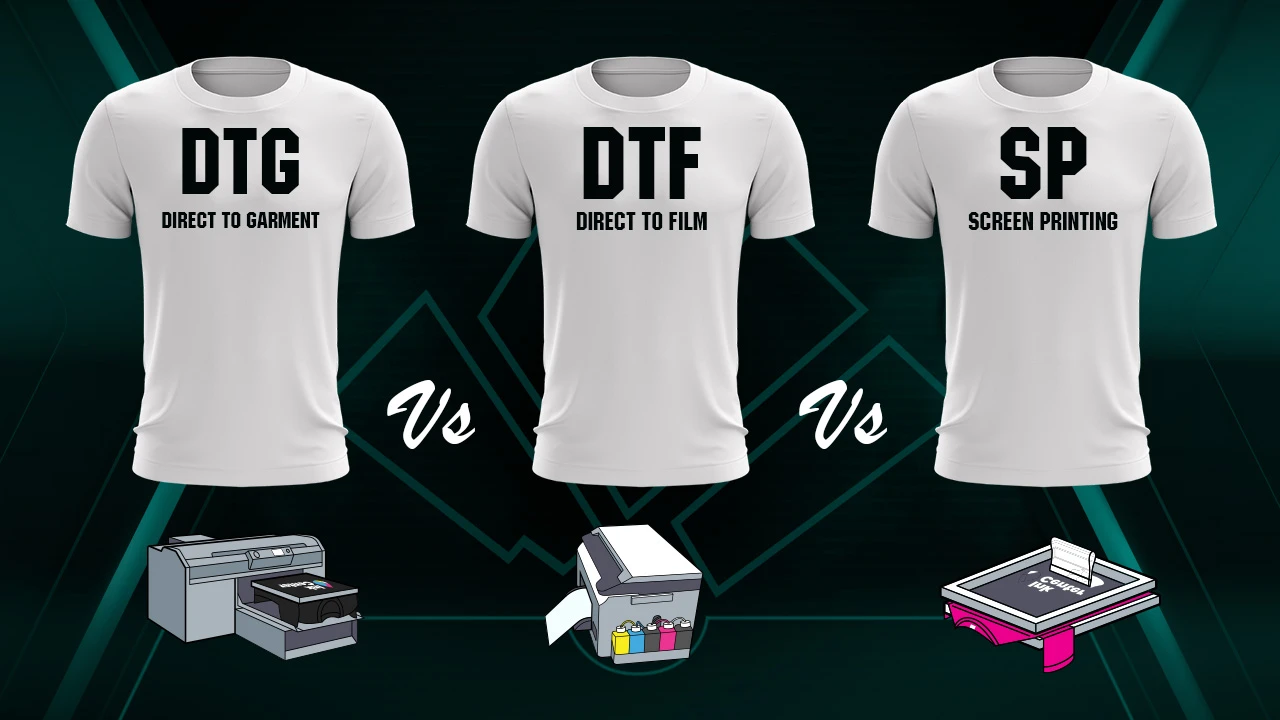
A comprehensive comparison of three popular textile printing methods: Screen Printing, Direct to Film (DTF) Printing, and Direct to Garment (DTG) Printing. Each method is evaluated based on cost efficiency, durability, setup time, detail and color range, fabric compatibility, environmental impact, and the feel of the print. Screen Printing is highlighted for its cost-effectiveness in large batches and vibrant colors, though it has high setup costs and environmental concerns. DTF Printing offers versatility and high-detail prints without pre-treatment but involves a complex process and can leave a heavier feel. DTG Printing excels in producing detailed, vibrant prints with a soft feel, making it ideal for small orders, though it is less durable and more costly for large production runs. The comparison aims to help businesses and individuals choose the most suitable printing technique for their specific needs.
